VITAL Conversations with Pastor Gerald & Amanda Humphrey
Vital Conversations:
Lessons Learned from the Margins
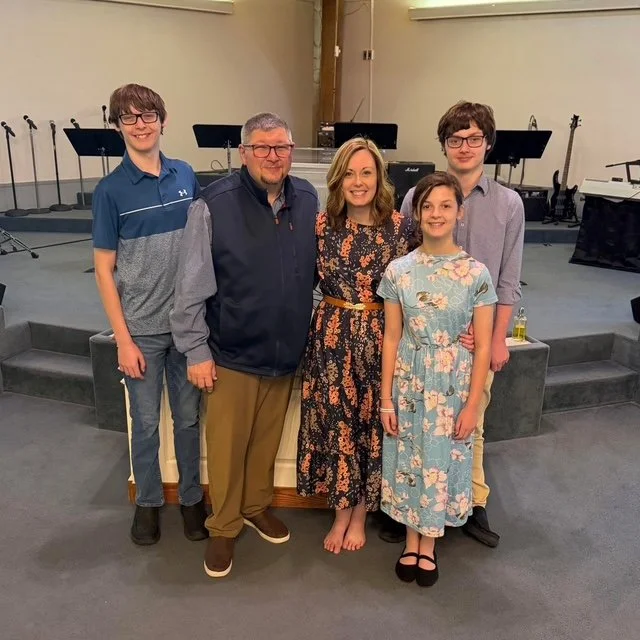
Name:
Gerald Humphrey
Spouse:
Amanda Humphrey
Kids:
Conner, Collin, & Addison
Church:
New Covenant Fellowship
How long have you pastored this church?
6 & 1/2 years.
Other churches you have served?
Hillsville Church of God for almost 11 years.
1. How has God confirmed His calling on your life?
God has confirmed His calling on my life through His faithfulness over time. When I look back, there is no way I could be doing what I do, or be where I am spiritually, without Him. Time and time again, God has opened doors, provided what was needed, and made a way when there didn’t seem to be one.
Even in seasons when I wasn’t listening as well as I should have, God was patient with me and continued to guide me. Looking back, I can see His hand directing my life every step of the way. His provision, grace, and persistence have been some of the clearest confirmations of His calling.
2. How has God proven His faithfulness in your ministry?
God has been faithful in every season of ministry. He has always taken care of my family and me, whether through employment that worked around ministry, financial provision, faithful volunteers, or lifelong friendships.
What amazes me most is how often God sends the right people at exactly the right time. When there has been a need, He has consistently provided a solution. Looking back over the years, I can honestly say that His faithfulness has never failed.
3. Why do you enjoy pastoring your local congregation?
One of the greatest joys of pastoring New Covenant Fellowship is the people. They genuinely love and care for others, not just my family and me, but anyone who walks through the doors.
Our congregation has a heart for people who are hurting, struggling, or searching for hope. They are willing to step up, serve, and help however they can. Seeing that kind of compassion lived out week after week is one of the most rewarding parts of ministry.
4. Why is your local congregation vital to your community?
Our church is vital to the community because we are deeply connected to the people we serve. In a place like Tazewell, relationships matter, and those relationships have opened doors for ministry that couldn't be created through programs alone.
Many of our ministries have grown naturally from needs we discovered through those connections. For example, our Bridge Builders Ministry serves shut-ins, nursing homes, and hospital patients. We have also seen prayer groups, young adult ministries, and other outreach efforts develop simply because people recognized a need and were willing to meet it.
Rather than forcing ministry opportunities, we have learned to follow where God is already working in our community.
5. What is one valuable lesson you’ve learned from a misstep or mistake in handling a situation?
One of the most valuable lessons I have learned is that I don't have to have all the answers.
Early in ministry, I felt pressure to know everything or at least appear as though I did. Over time, I learned there is wisdom in recognizing my limitations. Ministry is not about having all the answers, it's about being willing to seek God's direction and learn from others.
I've also learned the importance of surrounding myself with people who are gifted in areas where I am not. Strong leaders don't know everything; they build strong teams.
6. Have you had to think “outside the box” to accomplish a task or mission in the church and what was it?
Absolutely. One of the biggest shifts in our ministry has been embracing what I call "organic ministry."
We tried many traditional outreach methods, and while some were effective, we discovered that the greatest impact often came through existing relationships and opportunities God placed in front of us. Instead of creating programs and hoping people would come, we've learned to engage where people already are.
This has led to opportunities such as serving at senior living facilities, supporting our local high school marching band, and helping communities affected by flooding in Southwest Virginia and West Virginia. Those efforts eventually led to the creation of Hope's Storehouse, a ministry designed to help meet practical needs during disasters and emergencies.
I've learned that ministry doesn't always require a microphone or a platform. Sometimes it simply means being present, building relationships, and living like Jesus in everyday life. When we do that, God opens doors that we could never open ourselves.
7. What are some of the future ministry goals for your church?
One of our biggest goals is to continue growing Hope's Storehouse so that we can better serve families during emergencies, natural disasters, and other times of crisis. We would love to expand our resources and be prepared to provide practical support whenever needs arise.
Beyond that, we want to continue strengthening our current ministries while remaining open to new opportunities God places before us. Our goal isn't simply to grow programs, it's to grow our impact and continue serving our community in meaningful ways while following God's direction.